
Books and resources that have shaped how I think about technology, leadership, and building products. Books marked with an S-Team Book Club badge were part of Amazon’s senior leadership book club when I was there.
Leadership & Management
A foundational book that will get you to a plateau. It won't make you remarkable, but it will stop many of the things we've learned earlier in our careers or lives that make us ineffective every day.
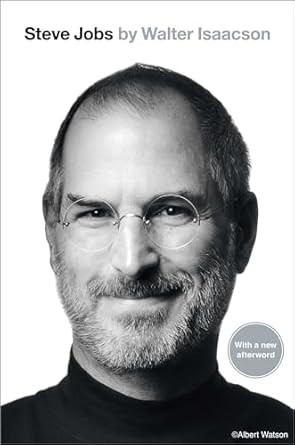
In my interactions with people like Steve that I've been privileged to have, I came to the conclusion that whether or not they needed to be a jerk to get to where they were, they could easily have been more effective by stopping being a jerk once they got there. The blindness which prevents them from seeing this, while they are so insightful on so many other things, still puzzles me.
This is a book you read once — maybe you skim it. The main thing to take away: in the vast majority of executive jobs, what they're really trying to figure out in the first 90 days is whether they made a hiring mistake. If you figure out what the criteria for that are — relationships, small wins, some change in some metric — you will be successful. The unsuccessful 90 days are characterized by you doing what you think is important, and them, on the 91st day, being pretty sure they made a hiring mistake.
The core framework — that each step up the leadership pipeline requires shedding old skills as much as acquiring new ones — is genuinely clarifying. Most leadership failures aren't about competence; they're about people who still value the things that made them successful at the previous level. Once you've seen a brilliant individual contributor flounder as a manager because they won't let go of the work, this book explains exactly why. Most companies' promo processes get this completely wrong. You have to be confident that the person will succeed in the new, different job, not just be excellent at the current job — that's table stakes for any employee whether they are up for promotion or not.
I am not sure this book has aged that well. That being said, maybe we're entering a new renaissance where the people part of engineering leadership is going to be even more important.
The central argument — that organizations optimized for 100% efficiency have no capacity left to change, learn, or respond to the unexpected — is one that most business leaders intellectually agree with and then immediately ignore when building their teams. Slack is what makes improvement possible. A fully loaded team is a team that can only do what it's already doing.
A classic! Amazing how lessons from the IBM 360 are still relevant, and how the same mistakes are made over and over. It's very sad how this book continues to have the word "man" in its title — I wish they would restructure the book as "The Mythical Person-Month." Enough said. I do believe we're going to encounter a brand-new phase of the mythical person-month as people add AI agents. Maybe the next version of the book would be called "The Mythical Agent-Week."
Lencioni writes in fables, which I find easier to absorb than straight business books. This one hit close to home — I've watched good people go through the motions not because the work was bad but because nobody told them it mattered. The three signs are a useful diagnostic for any manager who wonders why their team seems checked out.
The pyramid model — trust → conflict → commitment → accountability → results — is deceptively simple and surprisingly hard to argue with. The fable format makes it easy to read, but don't let that fool you into thinking it's lightweight; I've used this framework in more leadership conversations than almost any other book on this list. The dysfunction most teams skip past: artificial harmony masquerading as trust. For the very best Lencioni pyramid, see this visual.
When I read these books on Kindle, I create a set of notes — to see them, click here.
Two Navy SEALs walk into a boardroom and say: everything is the leader's fault, no exceptions. They're not wrong — but it helps to remember they learned this in situations where the alternative was body bags. My full Kindle notes are linked below. The concept I return to most: "there are no bad teams, only bad leaders." Uncomfortable, clarifying, and hard to argue with once you've seen both kinds of teams up close.
When I read these books on Kindle, I create a set of notes — to see them, click here.
My sad experience is that most business negotiations resolve somewhere within 10% of the midpoint of the two opening positions — regardless of who's actually right. This book is a manual for breaking that gravity. Voss's insight is that the emotional layer of a conversation is the real negotiation; the words are just the surface. My full Kindle notes are linked below. "Tactical empathy" sounds manipulative until you realize it just means actually listening to win on the merits.
When I read these books on Kindle, I create a set of notes — to see them, click here.
Who knew that CIA interrogation tactics could be useful at work? (mostly kidding...) Goulston's insight is that people can't hear you until they feel heard — and that most of us skip straight to making our case without ever clearing that bar. The book is aimed at therapy and sales but the core principle applies everywhere: the fastest way to get someone to listen to you is to make them feel completely understood first. A short read that will change how you open difficult conversations.
This book is obvious. The choice between being an arrogant ass and giving in is a fake choice. Strangely, I and others have found the length of the book useful for drilling in this concept. I would avoid the follow-on books though — well written but low ROI. How many times do we need to be told to stop being an ass? I guess a lot.
Reed Hastings built a culture that most companies claim to want and almost none are willing to actually build. The "keeper test" — would you fight to keep this person? — is the most clarifying management tool I've used. My full Kindle notes are linked below. The catch nobody talks about: the whole system depends on talent density being real, not aspirational. Talent density is hard, and it's a leader's single most important job — if you haven't done the work of exiting mediocre performers, the freedoms backfire.
When I read these books on Kindle, I create a set of notes — to see them, click here.
Written in 1967 and still the most useful book on being an executive. Drucker's central observation — that effectiveness is a discipline, not a talent, and can therefore be learned — cuts against every "natural born leader" narrative I've ever heard. My full Kindle notes are linked below. The chapter on time management alone is worth the read: most executives don't actually know where their time goes, and the gap between where they think it goes and reality is embarrassing. I actually hate this book because whenever I read it I feel like I am so very far from being an effective leader. Apparently it's a journey, not a destination.
When I read these books on Kindle, I create a set of notes — to see them, click here.
Bossidy and Charan's argument is blunt: most strategic failures aren't failures of strategy, they're failures of execution — and execution is a discipline, not a personality trait. The book is at its best when Bossidy is describing how he actually runs a business review or holds people accountable. Less useful as a system, more useful as a window into how a serious operator thinks.
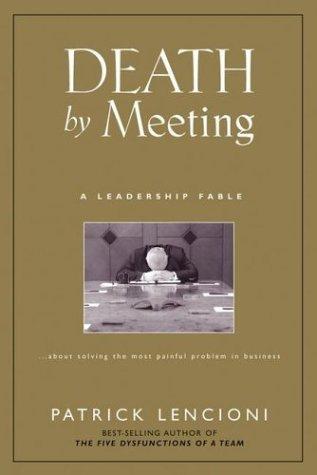
The title is right but the diagnosis is counterintuitive: meetings aren't bad because they're long, they're bad because they're boring. Lencioni's solution — inject more conflict — gets the problem right but misses the human dynamic. You're not going to get people lower in the power structure to embrace conflict no matter how hard you preach it; the incentives are just wrong. What you actually need is a system that actively encourages and protects productive, respectful discussion of controversial issues — which is harder to design and harder to sustain. Lencioni gets the diagnosis; I disagree with the prescription.
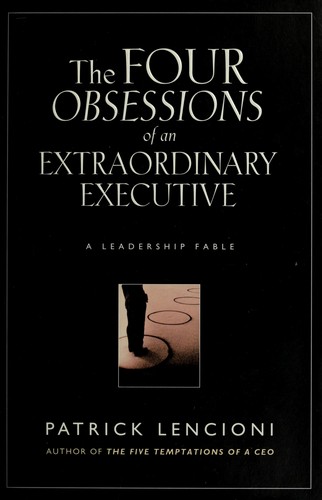
The least-read of the Lencioni books and possibly the most useful for a first-time executive. The core insight — that organizational health is a competitive advantage, not a soft concern — took me longer to fully believe than I'd like to admit. "Over-communicate clarity" sounds obvious; doing it consistently at scale is one of the hardest things a leadership team actually faces.
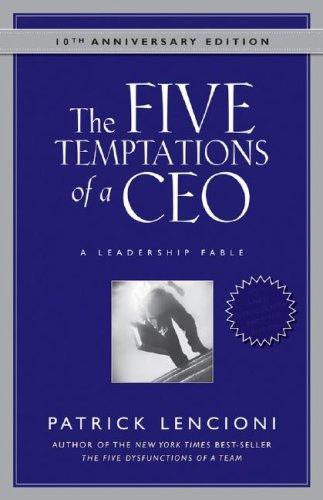
Lencioni's first book and still one of the sharpest. The temptation I see most often in myself and others is choosing certainty over clarity — waiting to communicate until you're sure, when what your team actually needs is directional clarity now, even if the details are still forming. A short read; worth doing before taking any new leadership role.
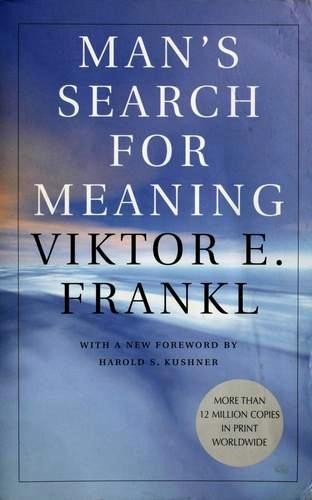
Frankl's account of surviving Nazi concentration camps and the psychological framework he developed — that meaning, not pleasure or power, is the deepest human motivation — is both devastating and clarifying. The lesson I carry: you can't always control what happens to you, but you can always choose your response. I hesitate to put something with such heavy gravity in my reading list — feel free to skip.

Horowitz makes a compelling case that culture isn't what you say — it's what you do, and especially what you tolerate. His examples are deliberately unconventional (Toussaint Louverture, Genghis Khan, samurai codes) because he's making a point: culture-building has been solved over and over throughout history, and the lessons transfer. The chapter on what happens when culture and ethics collide is the one most leaders wish they'd read before they needed it.
As an exec, deep work is almost impossible — dammit. As an IC, it's essential to have deep work to deliver the non-linear positive outcomes your customers and company need. Newport's argument — that the ability to focus without distraction on cognitively demanding tasks is becoming both increasingly rare and increasingly valuable — landed differently on me the second time I read it. The first time I agreed with it intellectually. The second time I realised how thoroughly I'd let my own habits drift in the opposite direction. The most uncomfortable book on this list, because the diagnosis is accurate and the cure requires actually changing how you work.
The core insight is genuinely liberating: your brain is terrible at storing open loops, and the anxiety of half-remembered tasks is a tax on everything else you're trying to think about. Even a partial implementation — write everything down, identify the actual next action — reduces cognitive overhead more than you'd expect. I've used GTD for decades and find it more powerful the more I use it.
There is a 2-page summary chart of the book midway through. If you're feeling a sense of urgency, just find and read that. Kotter's follow-up to Leading Change focuses on the single biggest reason transformations fail before they start: false urgency masquerading as real urgency. Busy-ness, meetings, and frantic activity feel like urgency but are often just noise — a way of avoiding the hard conversations about what actually needs to change. Real urgency is rare, uncomfortable, and focused on the right things.
A short essay but one of Graham's best. The central question — why do so many smart people end up with conventional opinions? — is more uncomfortable than it sounds. His answer: conformist thinking is rewarded by institutions, and most people are in institutions. Independent thinking requires actively choosing to be uncertain and possibly wrong in ways that are socially costly. Worth rereading any time you catch yourself believing something mainly because everyone around you does.
This book was recommended to me when I took on the role of CTO of Grabtaxi, the biggest ride-hailing company in Southeast Asia. It told me why I was landing so terribly with some of my teams, especially my Chinese ones. Nisbett's research on how East Asian and Western thinkers literally perceive and reason about the world differently was genuinely eye-opening. Not as a curiosity — as a practical leadership insight. If you've ever managed or worked closely with people across cultural lines and felt like you were talking past each other on something fundamental, this book provides the framework for why. The differences in how people weight context vs. object, relationship vs. rule, are real and deep — and most Western management books are written as if they don't exist.
Strategy & Innovation
The book that named the thing every tech leader fears. Christensen's core insight — that being good at what customers ask for today is exactly what makes you blind to what will kill you tomorrow — is one of those ideas that reframes everything once you've internalized it. Required reading before anyone in a market-leadership position gets too comfortable.
Collins's research-backed answer to "what separates good companies from truly great ones" — the Hedgehog Concept, Level 5 Leadership, the Flywheel — is a useful lens for any strategy conversation. The irony is that most of the companies he held up as models have since returned to the mean. Worth reading for the frameworks, but take the "greatness is repeatable" thesis with a grain of salt: it turns out sustained greatness is a lot harder to sustain than a book about it suggests.
Grove coined "strategic inflection point" from Intel's own near-death experience — the company nearly destroyed itself clinging to memory chips before pivoting to microprocessors. The core lesson: the signals of a fundamental shift are visible long before leadership is ready to act on them, and paranoia is a feature, not a bug. The irony is that Intel's recent trajectory — caught flat-footed by ARM's dominance in mobile, now leaning on a government bailout to survive — suggests Grove's successors forgot everything he wrote. Maybe he wasn't paranoid enough.
Harari's sweep through 70,000 years of human history manages to reframe almost everything — money, religion, empires, capitalism — as shared fictions that only work because enough people believe in them.
Taleb's core insight — that the most consequential events are the ones our models told us couldn't happen — is one you can't un-see. What's shifted since publication: black swans don't feel so rare anymore. The world keeps getting more complex, and the "once-in-a-generation" events keep arriving faster than a generation at a time. Maybe the real lesson isn't how to predict them — it's how to build organizations and lives that can absorb them.
Product
The book that redefined what good product management looks like. Cagan's core argument — that real product teams discover solutions, they don't just execute a roadmap handed to them — is both obvious in retrospect and violently resisted in practice. If you manage PMs or work with them, this is the shared vocabulary you want everyone speaking. The sequel (Empowered) goes deeper on the organizational side.
Where Inspired focuses on the craft of product management, Empowered focuses on the organizational conditions that make great product work possible — and why so many companies that adopt the vocabulary of "empowerment" never actually get there. The hard truth Cagan keeps returning to: you can't have empowered product teams without strong, coaching-oriented leadership and genuine trust in the team's judgment. Most orgs have neither.
Note that this isn't a Cagan book; but it's still good. The missing manual for product marketing — written from inside the SVPG world rather than the traditional marketing perspective. Lauchengco's core argument: product marketing isn't about promotion, it's about deeply understanding the market and making sure the product and the go-to-market strategy are actually aligned. Most tech companies treat PMM as a support function; this book makes the case it should be a strategic one.
Cagan's most ambitious book — a blueprint for how feature factories become genuine product organizations. The diagnosis of why transformation efforts fail (leadership says the right things but doesn't actually change how decisions get made) is the most useful part. The prescription is clear but hard: you can't transform product without transforming leadership first, and most transformations stop well short of that.
It's amazing that this book has aged so well. Truth typically does, I guess. Moore's framework for why technology products succeed with early adopters and then stall before reaching the mainstream — and what to do about it — is one of those mental models that becomes permanently installed once you've read it. The chasm between visionaries and pragmatists is real, the reasons for it are structural, and the solution (focus on a single beachhead market) is counter-intuitive enough that most companies ignore it even after reading the book.
The definitive inside account of how Amazon actually works — written by two longtime Amazonians who lived it. The working backwards process (start with the press release, then the FAQ, then build the product), the six-pager memo culture, the single-threaded owner model: all explained from the inside with enough detail to actually use. Required reading for anyone who has ever wondered how Amazon moves so fast at such scale. I lived this — it works.
Communication & Influence
Will change the way you look at and think about display of data
Data & Decision-Making
I've read it twice and it was cognitively hard both times. Kahneman's life work distilled: we have two cognitive systems — one fast, intuitive, and error-prone; one slow, deliberate, and lazy. Most of the ways we fool ourselves (anchoring, availability bias, overconfidence, loss aversion) come from System 1 running unchecked. The book is long but the ROI is high: once you can name your own cognitive biases in real time, you catch at least some of them. One of those books that makes you feel simultaneously smarter and more humbled.
Operations & Lean
If The Goal is the textbook, The Phoenix Project is the movie. Brent is the bottleneck. You will recognize Brent. You may have been Brent. Required reading for anyone leading an engineering or ops organization, and far more fun than it has any right to be for a book about IT processes.
Software Engineering
More extreme than Kent Beck! A very readable book. Some of his insights are really profound, others are just plain wacky. This book has the most pretentious bibliography I've ever seen.
This book presents extreme points of view — so naturally I strongly disagree with some ideas and strongly agree with others. A good book because it makes people think!
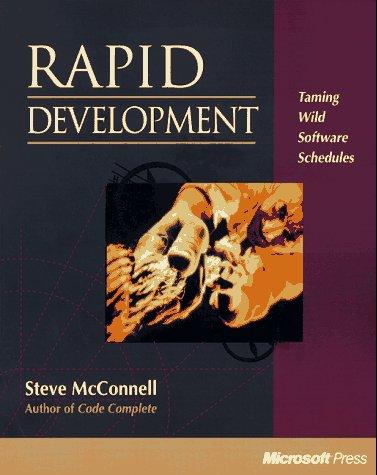
This is a rigorous great book, filled with useful stuff. The best practices section at the back is the best part.
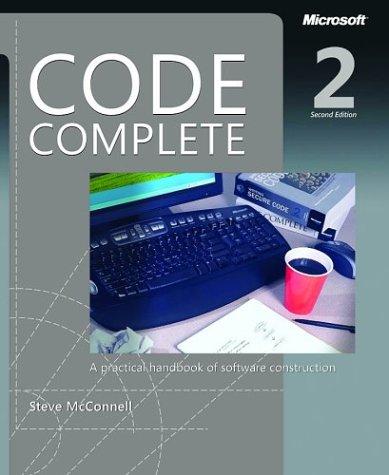
The most comprehensive book ever written on the craft of writing code. It's large and encyclopedic, but McConnell's core argument — that software construction is a discipline with learnable principles, not just talent — holds up across every language and paradigm shift since publication. The chapters on variable naming, code organization, and debugging alone are worth the price. A reference you return to rather than read cover to cover.
Nothing profound, just a good straightforward description of how good programmers use tools to create solid systems — the kind of thing you often don't learn at school.
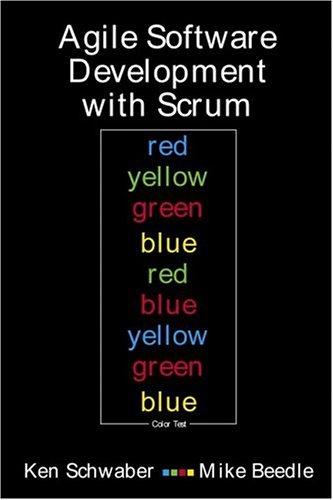
A bit old now but still stands as the Scrum bible
A bit newer and has a wider scope
Helfand challenges the "keep teams stable" orthodoxy with research showing that team change is inevitable, constant, and — when handled well — actually healthy. The five patterns of reteaming (one by one, grow and split, isolation, merging, switching) give you a vocabulary for changes that usually happen accidentally and badly. Useful for any engineering leader who has ever had to reorganize and felt like they were making it up as they went.
Programming Classics
Great stuff, but perhaps suffers from over expectations from the community. If you've written lots of systems you've used all these patterns before — now you have names for the patterns.
The ultimate reference for the language itself, though I wouldn't take the design stuff in this book too seriously. Not for the beginner.
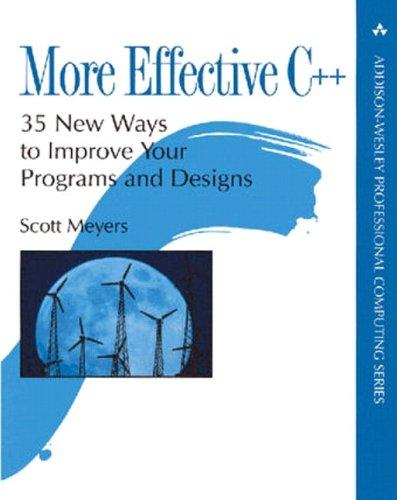
Good practical style for using C++ well. Read them!
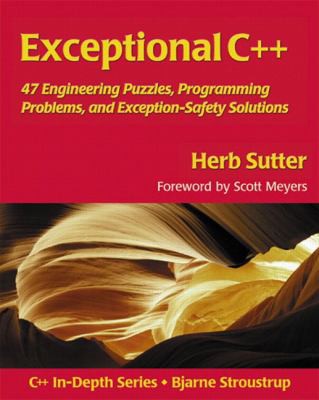
Challenging C++ stuff. A great read for the experienced C++ programmer — you are guaranteed to learn things you didn't think of before.
Books people keep recommending that I haven’t read
I haven't read it, but here is what I've heard: Grand built a living, breathing ecosystem from scratch in the game Creatures — creatures that learned, evolved, and surprised even their creator. This book is his account of how he thought about it. The S-Team read it because it forces you to think about emergence: how complex, adaptive behavior arises from simple rules. If you're building systems — technical or organizational — the question "what are the simple rules that produce the behavior I want?" is one of the most powerful you can ask.
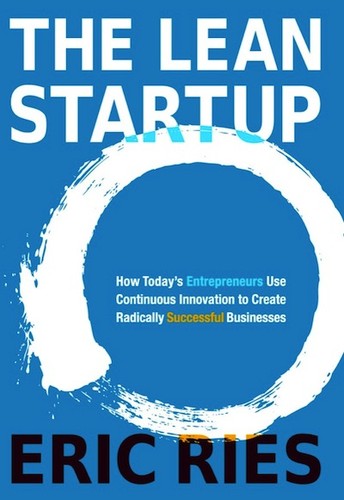
I haven't read it, but here is what I've heard: The book that made "MVP" a household term and gave a generation of founders permission to ship imperfect things. The core loop — build, measure, learn — is right. The danger is that most teams use it to justify building the wrong thing faster. The pivot is the most misused concept in tech: it's supposed to mean a structured course correction based on validated learning, not "we got bored and changed our minds."
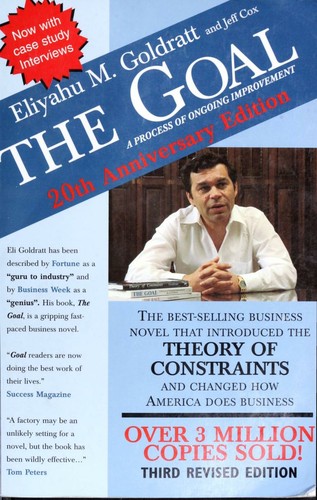
I haven't read it, but here is what I've heard: Written as a novel, which makes the Theory of Constraints surprisingly easy to absorb. The central insight — that a system's throughput is determined entirely by its bottleneck, and that optimizing anything else is wasted effort — is one of those ideas that fundamentally changes how you look at engineering teams, pipelines, and organizations. If you only read one operations book, make it this one. If you want to have more fun and get the same meaning, read "The Phoenix Project", a story of a fictionalized company going through a constraint problem named Brent.
I haven't read it, but here is what I've heard: Lewis tells the story of how the Oakland A's used data to compete with teams that had three times their payroll — and in doing so, exposed how much of "expert judgment" in baseball was just entrenched bias dressed up as wisdom. The S-Team read it because the lesson transfers directly to hiring and talent evaluation: the metrics most organizations use to judge people are often measuring the wrong things, and the people they overlook are frequently the most undervalued assets they could acquire.
I'm deeply concerned by Hubbard's central claim — that anything can be measured if you're willing to define what "measurement" actually means. While I actually agree with it, I think it gets weaponized so much that the ROI of measuring many things is near zero or even negative. Maybe I should read the book and make a decision. Let me know if you have feelings about this.
I haven't read it, but here is what I've heard: Silver's deep dive into why most predictions fail — and why a small number of forecasters consistently get it right. The answer isn't intelligence; it's calibration: updating your beliefs as new evidence arrives rather than defending your original position.
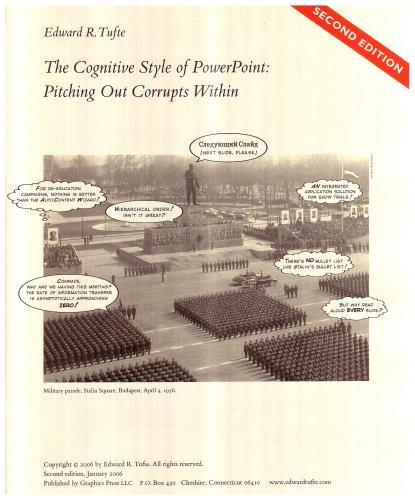
I haven't read it, but here is what I've heard: Tufte's brief but brutal takedown of PowerPoint as a tool that actively corrupts thinking. Bullet points fragment ideas, compress evidence, and hide the analytical work that should be visible to the audience. The replacement he advocates — written prose, dense with evidence — is exactly what Amazon's memo culture is built on.
I am told that this is the best book on nonfiction writing, full stop. I think the best way to learn non-fiction writing is in Andy Jassy's conference room, frankly. Jassy would agree with Zinsser's central point — that clutter is the enemy of clarity, and that every word that doesn't earn its place weakens the ones around it. Andy's edits would always focus on 1) what truth is present 2) what words are unnecessary, 3) what proof is missing. I should read this.
I'm told this is the original principled negotiation book — separate the people from the problem, focus on interests not positions, invent options for mutual gain. You might want to read this one before "Never Split the Difference."
I haven't read it, but here is what I've heard: Anderson's core insight — that the internet collapses the economics of scarcity that previously forced markets to focus on hits, enabling an almost infinite variety of niche products to find their audiences — predicted the streaming era, the app economy, and the creator economy before any of them existed by name.