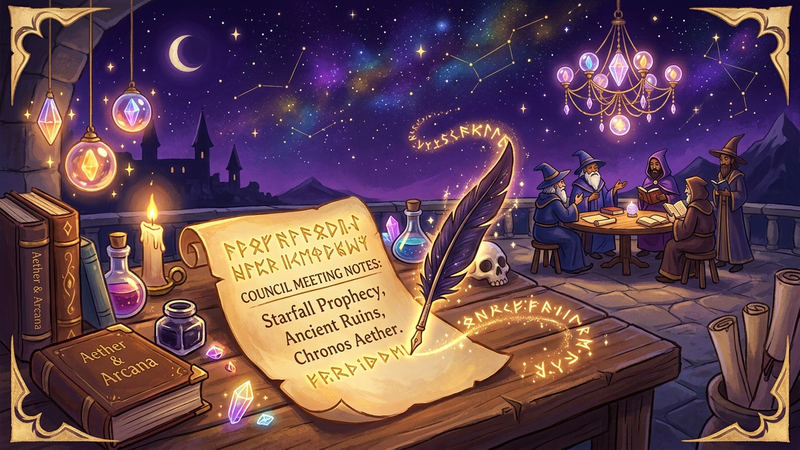
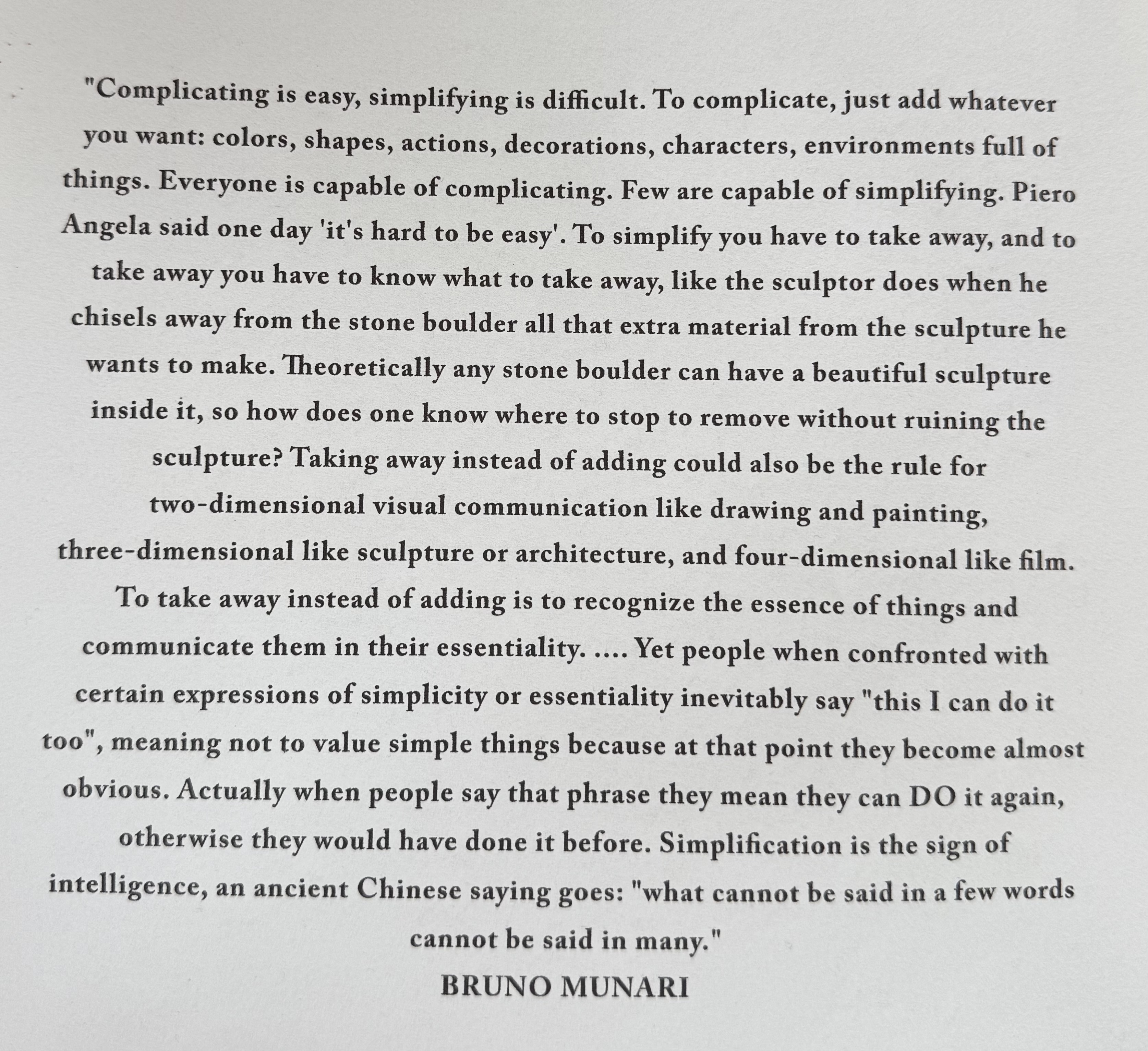
The image above is from an artist’s workshop I attended in March of 2025. It was supposed to be all about art — we were making books, bound in the benedictine style of the medieval ages. But to me, it seemed to sum up the essence of a very important part of any great technical org, or for that matter, any great org in general. As Stephen Covey says, “The main thing is keeping the main thing the main thing.”
Note: Much of this document is from my time at MongoDB and Grab, both of which used GoLinks — so ignore any company-specific references and don’t expect the
go/xxxshortcuts to work.
Introduction
A company succeeds or fails based on the speed and quality of the decisions it makes. The tactical and/or easily reversible decisions can be made without much discussion. Strategic decisions, however, require deep thought, healthy discussion, and memorialization. To do this, writing a memo may help in organizing your thoughts and conveying them with clarity to aid in our understanding and subsequent decision-making.
There is a basic difference between writing something down in prose — a memo, that is meant to be read silently — versus creating slides to be presented in real time with narration. This basic difference is for both the writer and for the receivers of the content.
This page gives guidelines on how to create an effective memo (or even a deck), in three sections: (i) general guidelines for writing good memos, (ii) key questions that should be addressed in memos for each type of meeting, and (iii) tips to ensure effective meetings. We adopted this “memo-mechanism” at the executive level and I’m sharing it here in case you also find it helpful in organizing your thoughts and the communications in your teams.
Every memo will be different and have different requirements, so please use your judgment when considering what may be relevant for a discussion. Writing a good memo is more art than science, and you shouldn’t feel constrained by these guidelines — innovate and bring yourself and your issue to the team in the best way.
General Memo Guidelines
Keep the End in Mind
- An upfront desired outcome statement (what are we trying to achieve, what is the purpose of this memo) plus a summary of key points is helpful.
- You don’t have to wait until the end to convey the key points.
- What are the key takeaways, risks, and outcomes you’re looking for?
Shorter is better, though more challenging for the author
- Readers need to separate signal from noise; less noise is helpful.
- The act of editing and condensing is a benefit of memos over presentations — clarity of writing conveys clarity of thought.
- See Paul Graham’s short essay on writing simply for more thoughts.
Anticipate, Analyze, Answer
- Try to anticipate questions in advance, and answer them in the memo (rather than saving key points for discussion).
- In particular, put numbers or facts that people will need — but don’t overwhelm with specificity, accuracy, or facts that aren’t relevant to arriving at a conclusion.
Prioritize substance and clarity over form
- Headers, page breaks, and other cosmetic formatting can actually hinder reader comprehension, even though they are intended to help. (Unselect View → Print Layout to lower the noise.)
- An organized memo on 1 or 2 pages is often less intimidating than a less efficient 3 or 4 pages.
- Memos are not meant to be a piece of art; don’t over-index on vocabulary or sentence structure (and don’t let others bully you into doing so).
Your job is to inform, not convince
- Avoid trying to convince your audience.
- Lay out the problem, the background, possible options, and (encouraged, but optional) your recommendation.
- Be measured in tone and dispassionate; avoid superlatives or overly alarming statements.
Put your company, customers, and employees first
- Many decisions will have different impacts on different teams.
- In your options and recommendation, optimize for the good of the company and your customers.
Stay on Target
- Don’t mix multiple topics together if you can avoid it. Either uplevel to the overall topic, or resolve the multiple topics separately. This avoids cycling.
- Be thoughtful with appendices — they are often helpful, but will go unnoticed if mixed into a high-volume appendix section. Include and reference them if you wish, but do not require them to be read for the desired outcome.
Most decisions evolve
- Think of the document as a living document — a statement of thought that evolves over time.
- Use the document itself to record the current outcome, either directly in the main text or as comments.
- Leaving comment threads (as opposed to resolving them) may help future readers understand what was considered important to discuss.
Meet your audience where they are
- If your audience prefers precise narratives, do that. If they prefer slides, try to do that. It’s hard to have actual deep decisions with staying power made with slides — the discussion is often surface-level enough that actual agreement is not reached, leaving room for re-litigation later. Overcome that with precision.
- Some teams like to see the whole problem and discuss it all at once. Others like to be fed the issue one piece at a time and make sub-decisions on the way to the major ones — if so, divide your presentation into pieces with either pauses for each sub-section and its decision, or even separate presentations.
- Your goal is to inform so that a decision can be made, and to do it in a way that you obtain understanding of the problem — a necessary agreement for any lasting decision.
Key Questions & Advice by Meeting Type
Reminder: many meetings have overlapping elements of the groupings below.
Operational Reviews (e.g., QBR, project update, status check-in)
- What goals have you been pursuing, how do they align to broader company objectives, and how are you doing against those goals?
- What barriers or obstacles have you encountered, and how did you deal with them? (Optional, only if they affected outcomes or future plans.)
- What has changed about your thinking since the last time the topic was discussed?
- What are your goals for the next quarter / year (or whatever the relevant timeline)?
- What does success look like over this period?
- How do we benchmark ourselves against best-in-class companies on our performance?
- Are there any relevant personnel issues that are relevant to the audience? (People are everything, but it’s only worth raising issues that are out of the ordinary.)
Analytical Report (e.g., results of an experiment, something more metrics-driven)
- What question did we set out to solve, and why?
- What were the key findings?
- Did the analysis raise any new questions?
- Next steps.
- What is the recommended action based on the evidence?
- What other questions do we need to go answer?
- Is the question settled, or how will we continue to monitor and develop more conviction?
Decision Making (e.g., there are multiple options and the group needs to decide)
- What is the question we are addressing, and the range of possible answers?
- Try “Desired Outcome, Background, Options 1–N, Recommendation” as a format.
- For each possible answer or solution, what are the advantages / disadvantages / risks?
- If you can, make a recommendation — but remain objective.
New Business / Investment Proposal
- Why do we think this initiative is worth pursuing?
- What are the tradeoffs? What else could we do with the money, attention, people, etc?
- What will be the impact or return on the investment, and how will we measure success?
- What are the risks? Where could we be wrong?
- What are the unknowns?
Ensuring an Effective Meeting
- Be clear on the outcome you want to achieve. Reiterate it in your opening remarks. (Are we making a decision, or is this just an update? Be wary of updates — in an empowered, high-trust company, they are rarely needed.)
- Let readers read the memo to start the meeting (thus long documents don’t work). Always give people at least Comment access on the doc before the meeting. It’s OK to distribute the memo beforehand, but don’t demand people read it before the meeting except in exceptional cases where the meeting can’t be long enough for reading time.
- Have a clear way for people to read at their own pace and signal when they are done reading - rather than polling. People can put pens down, raise hands in zoom, or if in zoom an even better way is to have people go off video while reading. Don’t poll, don’t have people place cursors at the top. people raise their hands in Zoom when done reading**, rather than polling verbally or placing cursors at the top. This is important so everybody reads; the organizer has to decide when enough people have read enough and had enough time.
- When everyone is done reading, kick off the discussion. Remind everybody of the desired outcome. Summarize the key points you want to convey before beginning. Ask for overall feedback before diving into details.
- Comments: When you start going through comments, know you don’t have to address every comment live (feel empowered to defer less urgent comments to a later answer). The goal is not necessarily to address every comment immediately, but to address key concerns, identify new avenues for discussion, and move the conversation forward.
- It’s YOUR meeting. Push for the outcome you need. Pause and summarize to ratchet discussion forward and expose misalignment. You don’t have to answer every question — find and answer the important ones. Ensure that you are getting to the desired outcome (decision, alignment, etc.) and redirect the meeting if it is going off track.
- After the meeting, address comments in the doc that were not answered live.
FAQ
1. Does every meeting need a document? Absolutely not. Use your judgment. It’s rare, but for some things — brainstorming, etc. — it’s not appropriate.
2. Why don’t we have templates? Wouldn’t that make it easier? We don’t want to straightjacket people into the way of thinking of the person who wrote the template. We want people to bring their whole issue. Templates inhibit thought in many cases and don’t let us get better. That said, if you find a previous document that matches how/what you’re trying to say — plagiarize.
3. Do other companies follow this idea of a writing culture? Yes, many. Check out Stripe’s writing culture and Jeff Bezos’s writing management strategy. And of course Amazon. And Meta. And Google.
4. Is a presentation (e.g., slides) ever appropriate? This is nuanced. Rarely. Just needing visuals isn’t a reason to use slides — just embed them in a doc. If you need animations, then sure. If that’s your judgment, be sure that your content can be consumed without a person speaking — i.e., only with the writing.
5. Do you have a longer explanation of why this is a good idea? Yes — see the discussion below.
6. Any resources you would recommend?
- Frances Frei’s TED talk How to Build (and Rebuild) Trust
- Barbara Minto’s Pyramid Principle — book and associated essay
Discussion
It’s abundantly clear that there is a continuing need to use meetings effectively — to quickly get to the key issues of any topic, to preserve enough time for debate and discussion, and to come to a clear decision or next step(s) to get to that decision. Unfortunately, in many of the meetings where the topic owner is using slides, far too much time is focused on presenting ideas versus discussing and debating ideas.
Why are slides a problem? The typical meeting starts with a presentation. Somebody leads the (virtual or physical) room with a slide show. There is little debate as people are trying to understand the presentation. Sometimes people interrupt with questions that are already answered in subsequent slides, or are lost and have to ask clarifying questions because they lack sufficient context. Preparing and presenting slides is easy for the presenter but more difficult for the audience, and this approach doesn’t lead to effective meetings. The presenter rarely gets to put their whole point across before they are questioned (interrupted) on subtopics or side topics. In addition, the audience typically gets only high-level information on the merits of a particular idea, limited clarity on the underlying assumptions, not enough understanding of what the root issues are or how the issues impact other parts of the business, and the bulk of the time is spent understanding versus debating what’s being proposed.
Given this, going forward for all new topics at important meetings, we use memos or documents rather than slides. Obviously this is not a new concept; many parts of the company already use this format for many meetings, and the approach has been widely touted at other companies. To be clear: this approach forces more preparation on the person owning the meeting — it’s much easier to write a 15-page slide deck than to write a crisp 3-page memo. The reason writing a crisp memo is harder is because the storytelling structure of a good memo forces better thought and understanding of the idea, and it exposes weak arguments that cannot be defended without solid reasoning and logic. Slides hide weaknesses in reasoning. Documents expose them. We do recognize that some complex ideas cannot be reviewed by just reading the memo in the meeting, so certain topics will require more advance notice so that people have sufficient time to review the memo in order to properly assess and debate the idea being proposed.
It is true that some topics need visuals — which makes some people think slides are the answer. But they aren’t. Place your visuals in the flow of your narrative. The key point is to make sure that your content can be consumed and understood without a person speaking to it. Now, if you need an animation (maybe 1% of the time?), then by all means wow us with your graphic-artist skills.
The obvious question is what’s the guideline of a good memo vs. a bad one. There are no hard and fast rules — we will know a good memo when we see it. It is highly likely that the more cogent and succinct the memo is, the better it will be received.
We also recognize that there will be bumps in the road and that we will get better over time, so everyone will need to be patient. Lastly, there may be certain well-understood meeting formats or topics where ground rules and assumptions on what’s to be discussed are very clear — then slides might be appropriate. Examples are the sales QBR with a standard format, or reviewing an update on a previously well-discussed topic, or a dashboard reviewing financial and other operating metrics. However, it’s hard to imagine that these won’t also be better with visuals embedded into a document. If you find a case where slides are better than visuals in a document, let me know — and I’ll update this text.
Let’s all get to good decisions that are aided by clear thought — and those are aided by everybody having a level playing field of understanding of a well-explained topic. Critical writing leads to critical thought, which leads to deep discussions, which leads logically to better decisions.
Licensed July 2021–2025 via Apache 2 by Mark Porter — content may be distributed as long as this license notice and attribution is maintained.